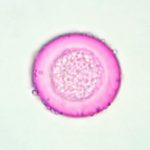
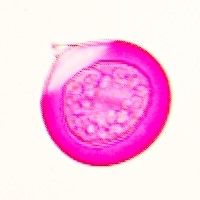
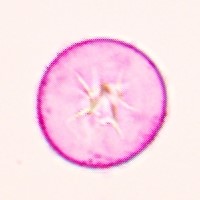
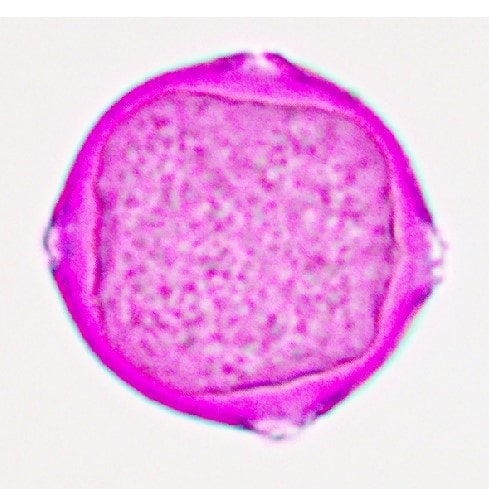
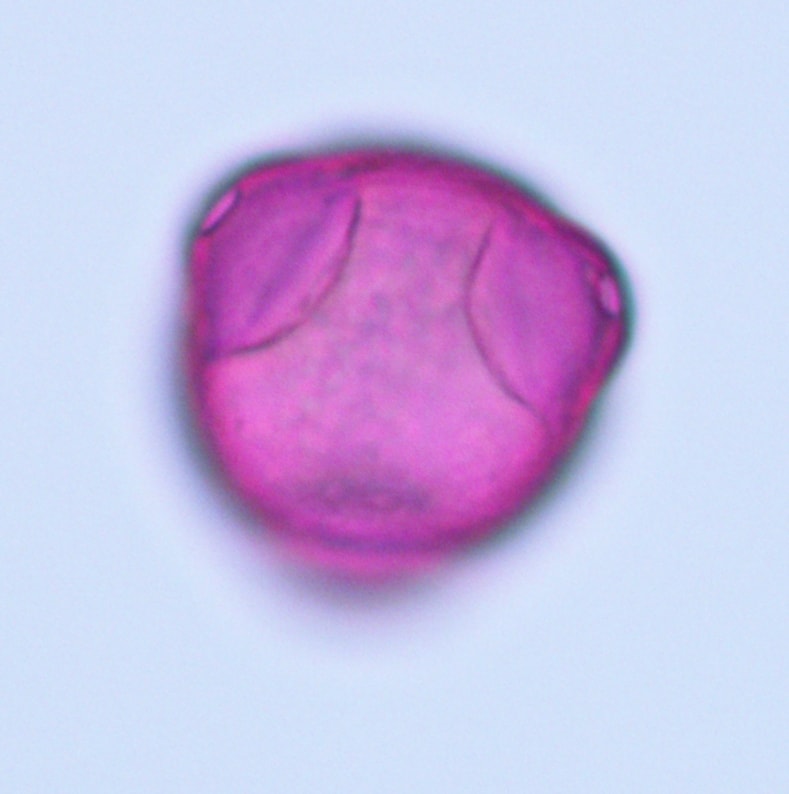
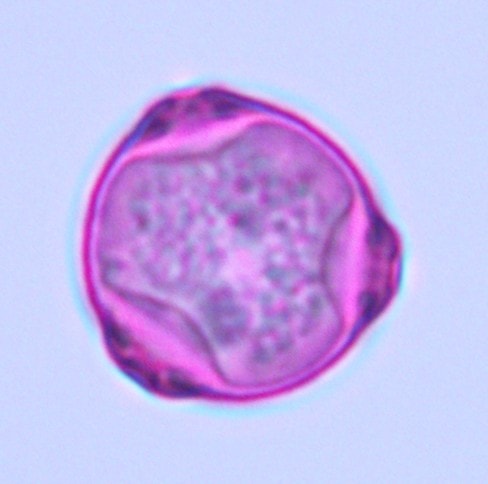
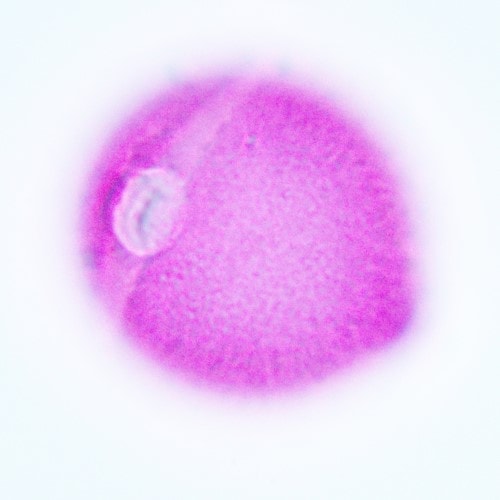
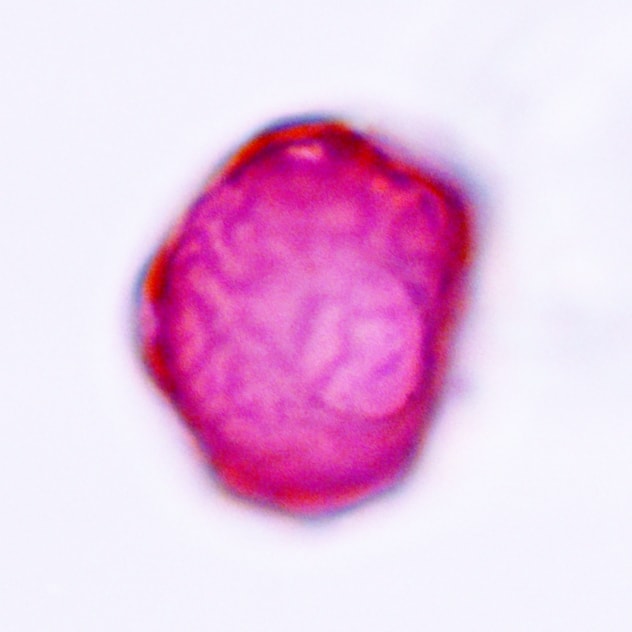
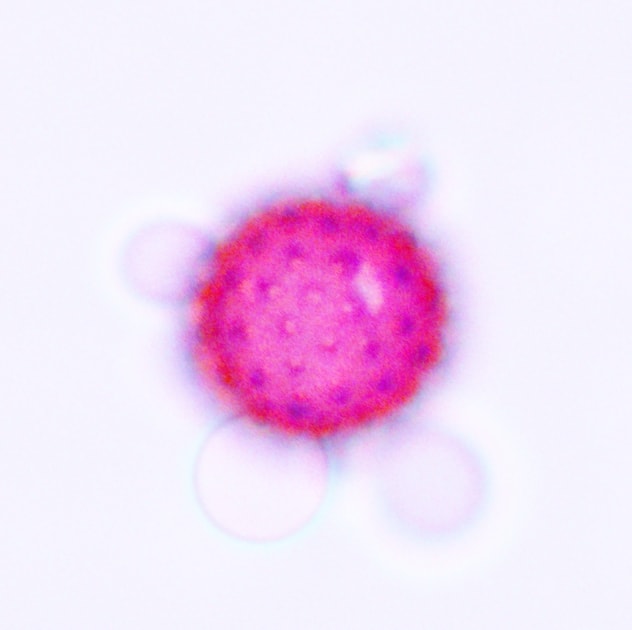
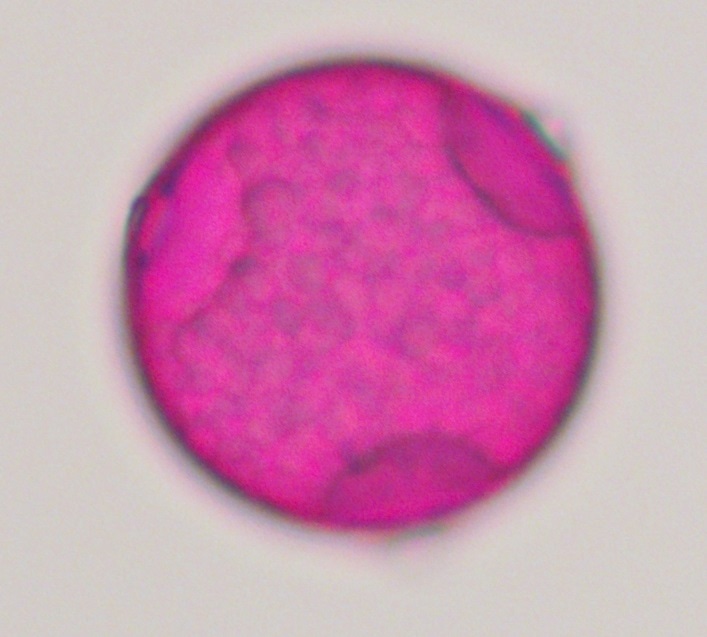
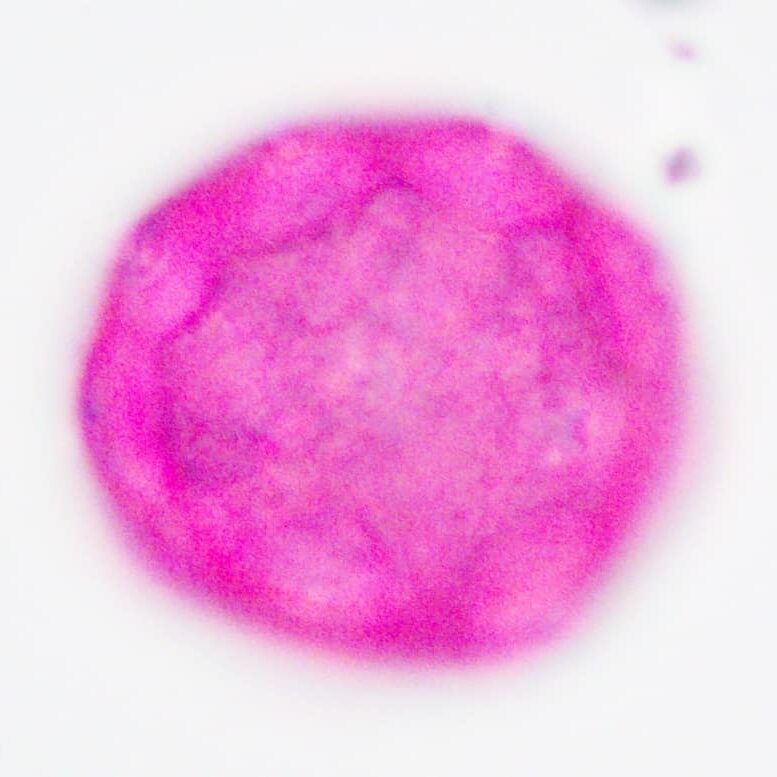
The pollen pictures below were taken in my lab using an Olympus compound microscope. To bring clarity to the features of the pollen, different level of digital zoom is used. As a result, the pollen images are not to scale relative to each other. For example, cypress pollen which is around 32 microns, looks bigger than pine, which is 90 microns. So, do not draw inferences on pollen size by comparing the photos in the pollen library.
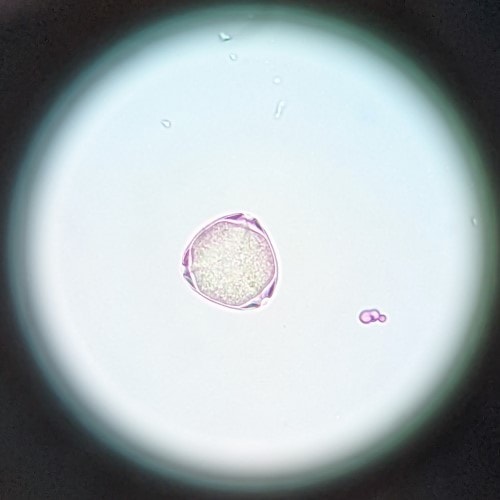
Some pictures were taken using a trinocular camera, and some were taken from a smartphone over the eyepiece.
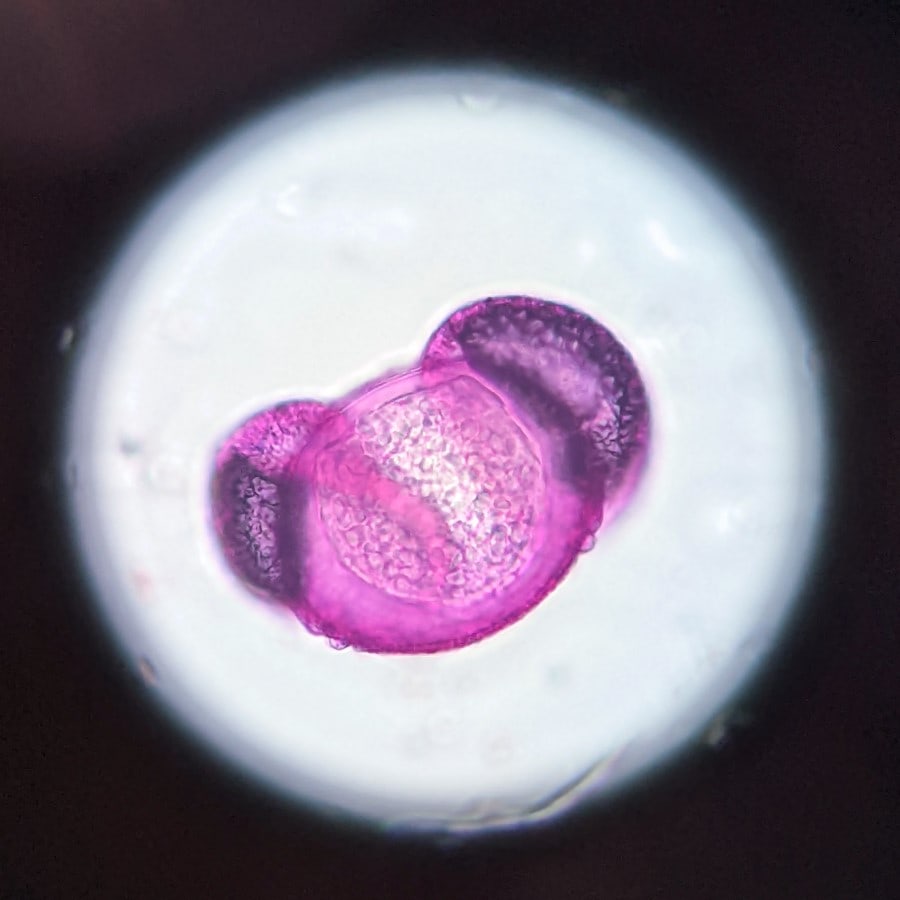
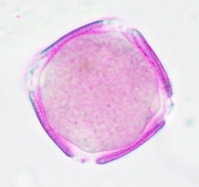
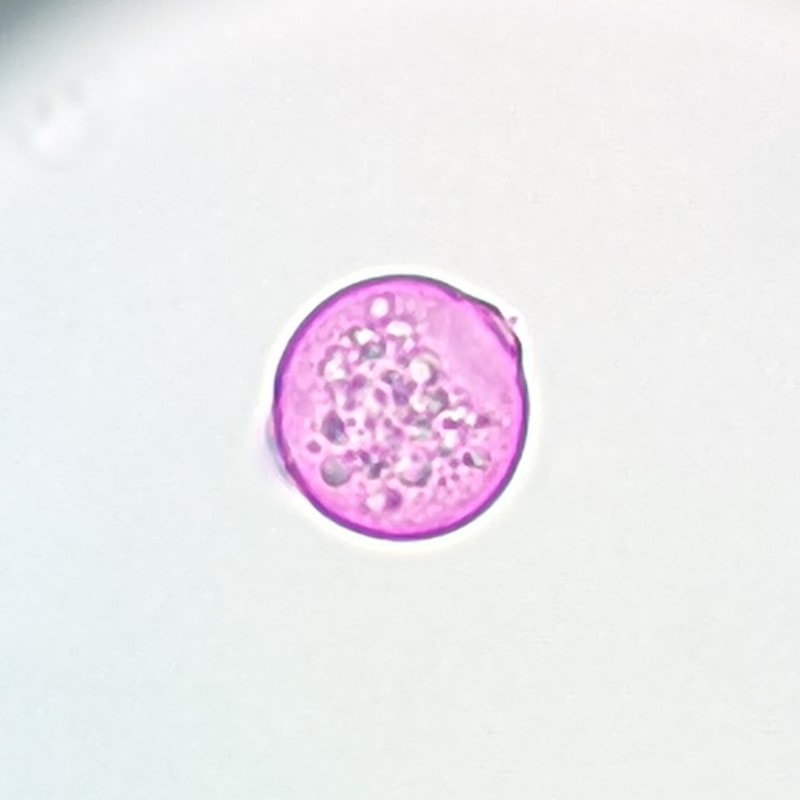
Douglas fir pollen, 120 microns. @400x magnification under a microscope.
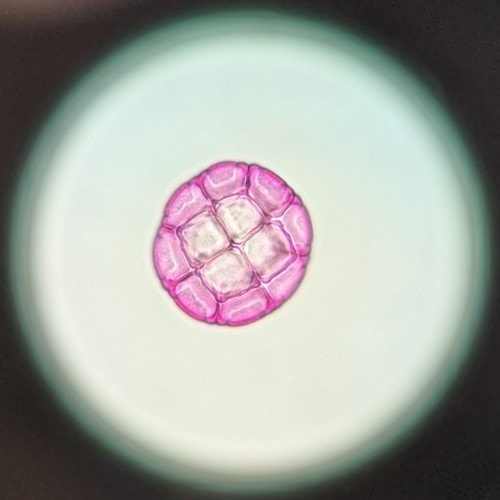
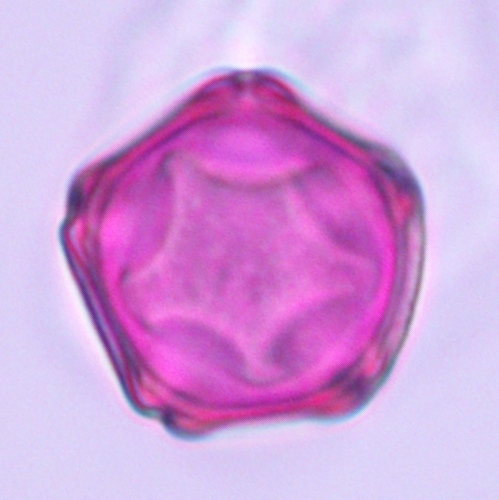
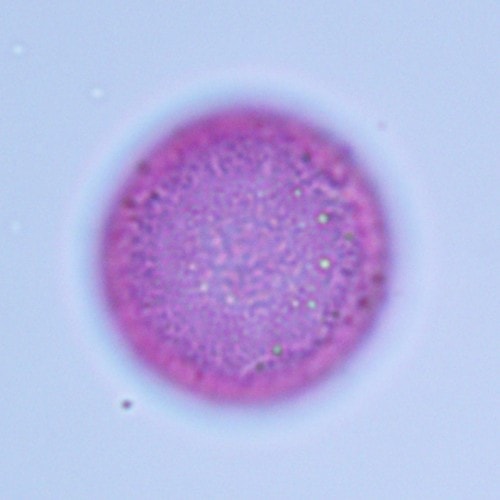
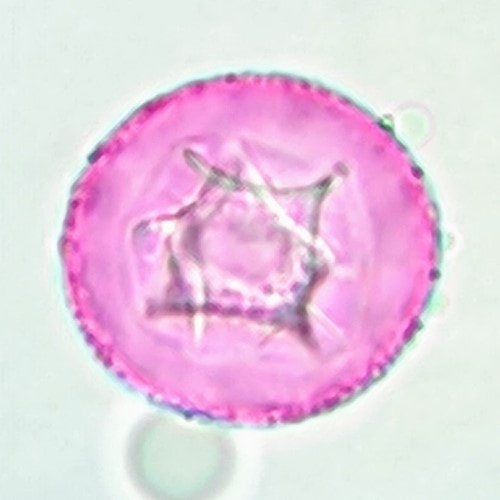
Acacia pollen under a microscope.
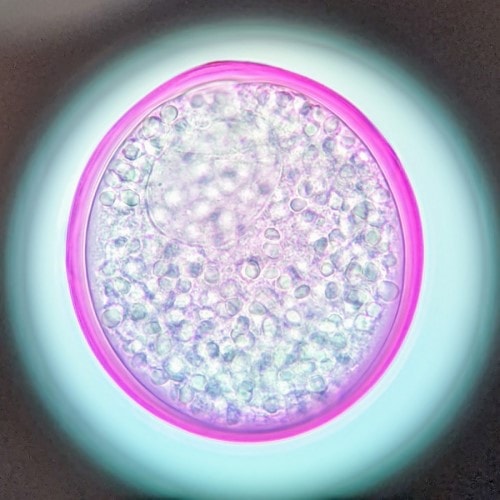
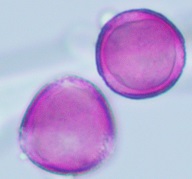
Pine pollen: Microscopic view (~400X) pine family is around 90 to 100 microns in size.
Sudhir is certified by the National Allergy Bureau (NAB) as a pollen counter and identifier. He has been living with Hay Fever for nearly 30 years and studies allergens at his aerobiology lab.
7 thoughts on “Pollen pictures of allergy plants.”
I do microscopy all day long for air quality and this time of year we see a lot of pollen, of course. I so appreciate your broad list and photos here to recognize a bit better the various genera of pollen that I see on a daily basis! I don’t remember ever seeing acacia, but I suspect that you got a particularly beautiful angle, whereas I might see the less symmetrical, clumpy particles and not even realize they’re pollen.
Hello! This is very fascinating!
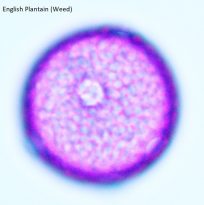
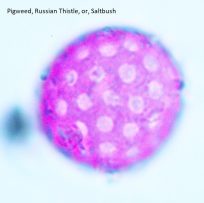
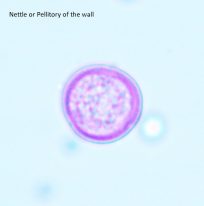
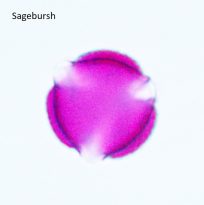
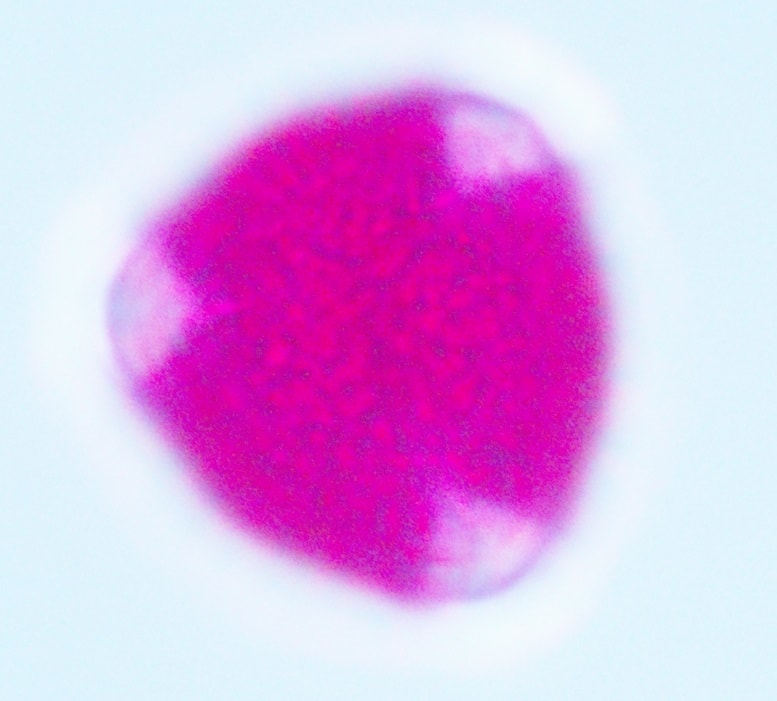
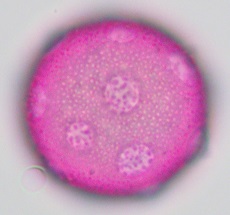
What does the negative space in some of these photos indicate? For example, the Artemisia pollen has three negative space divets on its walls. Others have circular negative space shapes in the center. Curious about it!
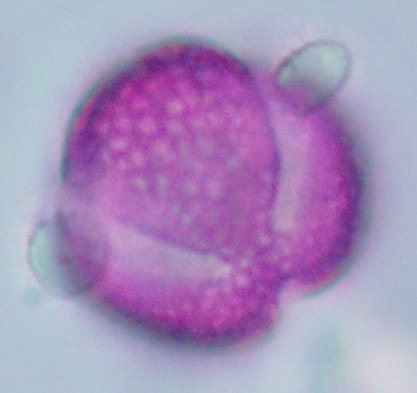
Jeni – Pollen has pores, furrows, or both, which are the negative spaces you see. These features of the pollen wall do not stain. You can see furrows more clearly in the Willow pollen, which is photographed from a different angle. Similarly, you can see American Beech with both a furrow and a pore from a different angle. The two dimensional top view (or polar view) for Sagebrush tells us that is has three furrows (colpi) and each contains a pore. This makes Sagebrush Tricolporate (Tri + Colpi + pores) and is a key piece for its identification.
Warm regards,
Sudhir Setia
Terrific website, the best allergy/pollen site that I’ve seen….well organized, informative, beautiful. Although not a certified counter I’ve had a lifetime interest in pollen study. I really appreciate what you have done.
Palo Alto Pollen Count Commentary
I do regular air sampling and plant inspection to bring you the most accurate pollen count of Palo Alto. There are about 400 different species of city trees in...
In this article, with the help of photos, we will learn about the Ginkgo biloba tree. The tree is sometimes simply referred to as ginkgo or maidenhair.
Although ginkgos are not commonly...
We use cookies on our website to give you the most relevant experience by remembering your preferences and repeat visits. By clicking “Accept”, you consent to the use of ALL the cookies.
This website uses cookies to improve your experience while you navigate through the website. Out of these, the cookies that are categorized as necessary are stored on your browser as they are essential for the working of basic functionalities of the website. We also use third-party cookies that help us analyze and understand how you use this website. These cookies will be stored in your browser only with your consent. You also have the option to opt-out of these cookies. But opting out of some of these cookies may affect your browsing experience.
Necessary cookies are absolutely essential for the website to function properly. This category only includes cookies that ensures basic functionalities and security features of the website. These cookies do not store any personal information.
Any cookies that may not be particularly necessary for the website to function and is used specifically to collect user personal data via analytics, ads, other embedded contents are termed as non-necessary cookies. It is mandatory to procure user consent prior to running these cookies on your website.



I do microscopy all day long for air quality and this time of year we see a lot of pollen, of course. I so appreciate your broad list and photos here to recognize a bit better the various genera of pollen that I see on a daily basis! I don’t remember ever seeing acacia, but I suspect that you got a particularly beautiful angle, whereas I might see the less symmetrical, clumpy particles and not even realize they’re pollen.
would it be possible to use some of these images in an educational video presentation? If so, how would one cite them / provide copyright info ?
Yes, please! Please cite Sudhir Setia/Allerma.com for the pictures so that the curious minds can come to the source for more information. Thank you!
Hello! This is very fascinating!
What does the negative space in some of these photos indicate? For example, the Artemisia pollen has three negative space divets on its walls. Others have circular negative space shapes in the center. Curious about it!
Jeni – Pollen has pores, furrows, or both, which are the negative spaces you see. These features of the pollen wall do not stain. You can see furrows more clearly in the Willow pollen, which is photographed from a different angle. Similarly, you can see American Beech with both a furrow and a pore from a different angle. The two dimensional top view (or polar view) for Sagebrush tells us that is has three furrows (colpi) and each contains a pore. This makes Sagebrush Tricolporate (Tri + Colpi + pores) and is a key piece for its identification.
Warm regards,
Sudhir Setia
Terrific website, the best allergy/pollen site that I’ve seen….well organized, informative, beautiful. Although not a certified counter I’ve had a lifetime interest in pollen study. I really appreciate what you have done.
Bob Harris
Texas
Thank you, Bob! I really appreciate the kind words.